2011-present, Independent Research Group Leader, University of Zurich
2002-present, Scientific Collaborator at Koordinationsstelle für Amphibien- und Reptilienschutz in der Schweiz (www.karch.ch)
2003-2011, Postdoc in the group of Prof. Uli Reyer, University of Zurich
1999-2002, PhD in evolutionary biology (“Predator-induced phenotypic plasticity in larval newts”; supervisor: Josh Van Buskirk), University of Zurich, Switzerland
1996-1999, Collaborator at the Amt für Raumplanung, Abteilung Natur und Landschaft, Kanton Basel-Landschaft
1995-1995, MSc in population biology (“On the maintenance of the genetic polymorphism at the locus LDH-B in the pool frog, Rana lessonae“; supervisors: Hansjürg Hotz, Brad R. Anholt, Uli Reyer, Stephen C. Stearns)
1988-1995, Studies in Biology, University of Basel, Switzerland
Series of congratulations to Dominik on three wonderful achievements!
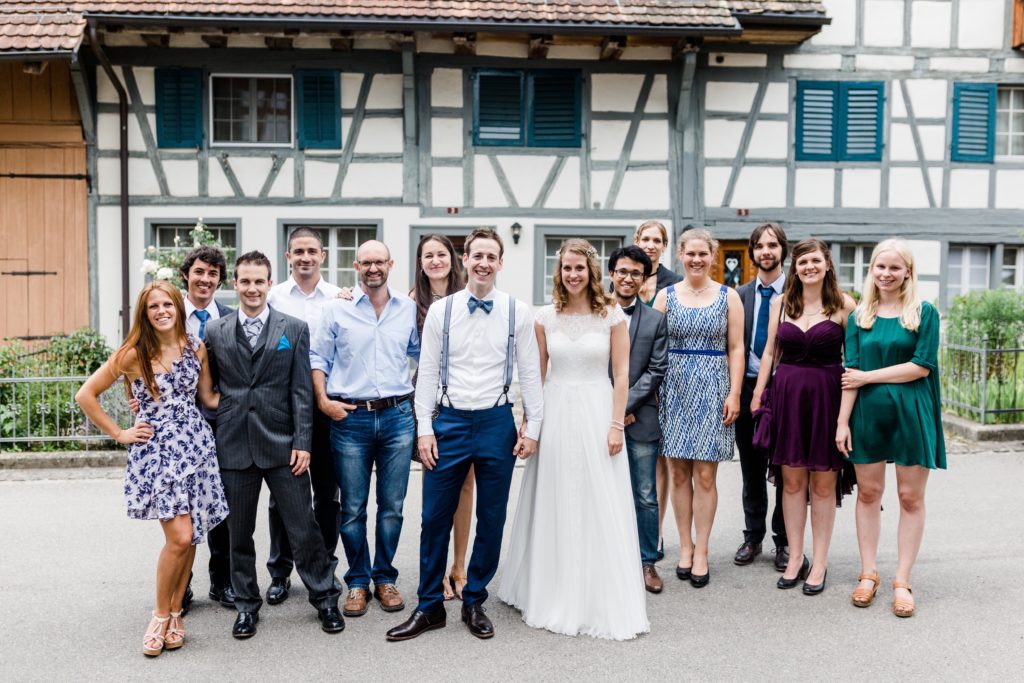
First and foremost, he managed to persuade a wonderful lady, Regula, to tie the knot. We wish them a long and happy life together. May they grow old on one pillow!
Secondly, he successfully attracted third-party funding to support his PhD study on wild dog dispersal in Botswana, and started his PhD work. He is currently out and about, gps-collaring wild dogs together with Gabriele.
Last but not the least, he just received the Albert Heim Foundation’s 2016 Science Award, with his MSc work on the Swiss wolves. This award is given annually to outstanding work by young researchers in Swiss universities. The broad spectrum of research includes various disciplines around canines, including interdisciplinary issues such as the human-wolf relationships, which Dominik has nicely studies during his MSc. He sure will be a promising contender again with his new canine sp. in the upcoming years.
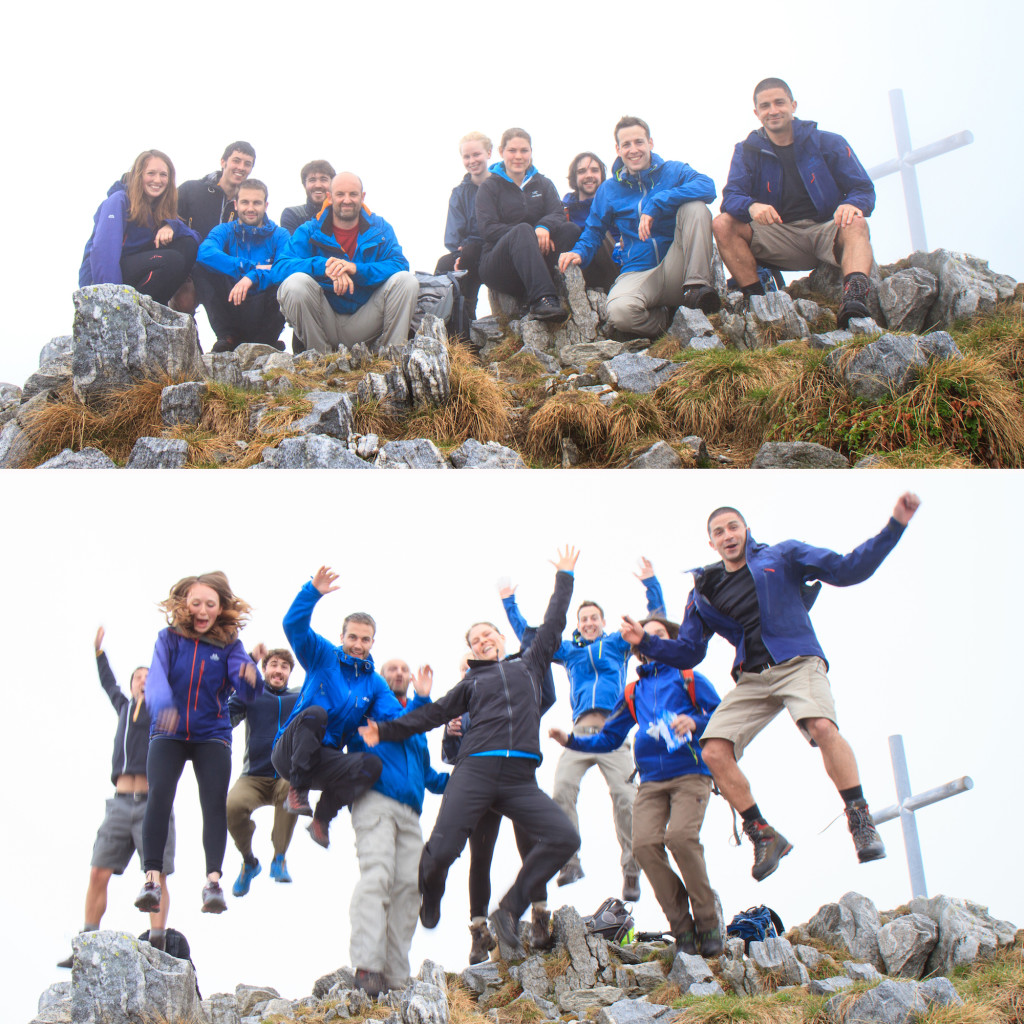
This year, our group retreat was in Ticino. It involved ten group members, climbing up 1000m from Mergoscia to Cimetta, staying overnight at the top, and coming back down the next day. A great escape from “winter” in M̶o̶r̶d̶o̶r̶ Zurich. Thanks to Gabriele for organising the retreat and Chris for putting together this video summary:
I am a quantitative ecologist focusing on the development of individual-based models to enhance predictions of wildlife population dynamics. Building on these models, I evaluate population viability under different scenarios and use reinforcement learning to identify the most effective conservation or management actions. While I work across diverse animal taxa, I have a particular interest in endangered species with complex social systems and those involved in human-wildlife conflict.
Throughout my research career, I have developed in-depth expertise in population and movement ecology, with a particular focus on how dispersal influences population demography and spatial connectivity. Much of my work has centered on the endangered African wild dog, through which I gained extensive experience in demographic modeling, individual-based models, mark-recapture analyses, and integrated population models. More recently, my research has expanded to include multiple species and systems, including meerkats in South Africa, giraffes in Tanzania, mouse lemurs in Madagascar, mountain gorillas in Rwanda, bottlenose dolphins and dingoes in Australia, as well as roe deer and wolves in Switzerland. With an interdisciplinary background in ecology and engineering, I aim to integrate ecological knowledge with robust quantitative modeling to inform effective conservation and management decisions for wildlife populations.
Research interests
Population ecology, movement ecology, conservation biology, decision science, population viability analysis, mark-recapture analysis, Bayesian statistics
2021–2025, Postdoctoral scientist | Population Ecology Research Group, University of Zurich
2016–2021, PhD in ecology | Population Ecology Research Group, University of Zurich in collaboration with Botswana Predator Conservation (Maun, Botswana)
2014–2025, Wildlife education and tour guide | Zoo Zurich
2014–2015, MSc in Environmental Sciences | University of Zurich
2014, Nature field guide qualification | Field Guide Association of Southern Africa (Limpopo, South Africa)
2008–2009, Various internships as an operations engineer in the private sector (USA & Switzerland)
2006–2009, MSc in Management, Technology and Economics | Swiss Federal Institute of Technology (ETH) Zurich
2005–2006, Research assistant & teaching assistant | Institute of Environmental Engineering, ETH Zurich
2003–2006, BSc in Environmental Engineering | ETH Zurich
Publications
Fagan WF, Krishnan AG, … Behr DM, … Calabrese JM (2025) Wild canids and felids differ in their reliance on reused travel routeways. Proceedings of the National Academy of Sciences ➤
Bond M*, Behr DM*, … , Paniw M, Ozgul A (2025) Demographic drivers of population dynamics reveal subpopulation-specific conservation needs for giraffes in the Serengeti Ecosystem. Journal of Wildlife Management ➤
Hofmann DD, Behr DM, McNutt JW, Ozgul A, Cozzi G (2024) Dispersal and connectivity in increasingly extreme climatic conditions. Global Change Biology➤
Cozzi G, Reilly M, Abegg D, Behr DM, … McNutt JW (2023) An AI-based platform to investigate African large carnivore dispersal and demography across broad landscapes: A case study and future directions using African wild dogs. African Journal of Ecology➤
Behr DM, Hodel FH, Cozzi G, McNutt JW, Ozgul A (2023) Higher mortality is not a universal cost of dispersal: a case study in African wild dogs. American Naturalist ➤
Tucker MA, Schipper AM, … Behr DM, … Mueller T (2023) Behavioral responses of terrestrial mammals to COVID-19 lockdowns. Science➤
Hofmann DD, Cozzi G, McNutt JW, Ozgul A, Behr DM (2023) A three-step approach for assessing landscape connectivity via simulated dispersal: African wild dog case study. Landscape Ecology ➤
Hodel F*, Behr DM*, Cozzi G, Ozgul A (2023) A hierarchical approach for estimating state-specific mortality and state transition in dispersing animals with incomplete death records. Methods in Ecology and Evolution ➤
Jordan NR, Golabek KA, Behr DM, … , McNutt JW (2022) Priority of access to food and its influence on social dynamics of an endangered carnivore. Behavioral Ecology and Sociobiology➤
Hofmann DD*, Behr DM*, McNutt JW, Ozgul A, Cozzi G (2021) Bound within boundaries: Do protected areas cover movement corridors of their most mobile, protected species? Journal of Applied Ecology ➤
Behr DM, McNutt JW, Ozgul A, Cozzi G (2020) When to stay and when to leave? Proximate causes of dispersal in an endangered social carnivore. Journal of Animal Ecology ➤
Cozzi G, Behr DM, Webster H, Claase M, Bryce CM, Modise B, McNutt JW, Ozgul A (2020) African wild dog dispersal and implications for management. Journal of Wildlife Management ➤
Behr DM, Ozgul A, Cozzi G (2017) Combining human acceptance and habitat suitability in a unified socio-ecological suitability model: a case study for the wolf in Switzerland. Journal of Applied Ecology ➤
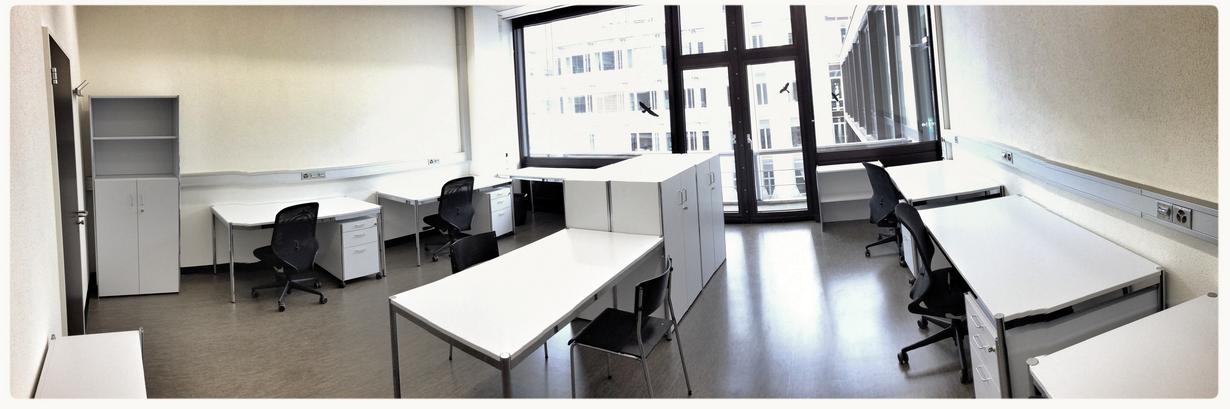
We just got the keys to our new headquarters. Too clean and empty… let’s see how long it will take us to transform it from this hospital-like look to a ‘proper’ population ecology lab.